Towards a sustainable solution for Umicore's radioactive legacy in Olen
Umicore's site in Olen, Belgium, has reinvented itself. Today, the site focuses on research and development of clean, high-performance technologies and the production of high-tech materials based on cobalt, nickel and germanium. These critical metals are used, for example, in rechargeable batteries, the fiber-optics industry, or in lenses and solar cells for space satellites.
At the same time, the site also has a historical footprint. From 1922 until the end of the 1970s, Umicore's predecessors produced radium and uranium products in Olen. When these activities were stopped, all buildings and installations containing radioactive materials were dismantled and remediated to ensure the safety of people and the environment. The resulting radioactive materials were subsequently stored in three authorized on-site facilities and in two historical locations.
All the works were carried out under the supervision of the relevant government agencies FANC/AFCN (Federal Agency for Nuclear Control) and OVAM (Public Waste Agency of Flanders), which, together with Umicore, have continued to closely monitor these storage facilities and locations ever since.
The storage of this historical radioactive material is under control and currently poses no risk to human health or the environment. However, Umicore, FANC/AFCN, OVAM as well as NIRAS/ONDRAF (National Agency for Radioactive Waste and Enriched Fissile Materials), have been working towards a permanent and final disposal solution for what could be designated as low-radioactivity, long-lived radium-containing waste. This is a specific type of radioactive material, and the volume is expected to be small in comparison with the total amount of material.
NIRAS/ONDRAF is responsible for submitting a proposal for a national policy for each radio-active waste category to the Belgian government, enabling a disposal decision to be made. A key step in this process is the establishment of a policy framework that allows for a definitive management solution for this specific type of low-radioactivity, long-lived radium-containing waste.
By law, the proposal prepared by NIRAS/ONDRAF was subject to a national public consultation, which took place from 2 December 2024 to 2 March 2025. After reviewing the feedback received, NIRAS/ONDRAF submitted an updated proposal to the federal government in September 2025. A decision by the government is now pending.
Regarding the possible costs of the eventual disposal of this specific type of radioactive waste, it is not possible at this stage to provide a more detailed cost estimate than what is included in Umicore’s publicly available financial reports. This is directly related to the nature of the materials concerned and to what may be designated as waste in the future. In this context, the distinction between “materials” and “waste,” and the use of correct terminology, are important.
Information on NIRAS/ONDRAF’s proposal can be found here: Nationale raadpleging / Consultation nationale
Umicore's historical liabilities in Olen
From 1922 until the late 1970s, Umicore's predecessors produced radium and uranium products. Nobel Prize winner Marie Curie regularly carried out experiments with radium in Olen. The element formed the basis for nuclear medicine and was the only cancer treatment until the 1960s. The use of radium as a healthcare product gradually declined with new insights into its risks.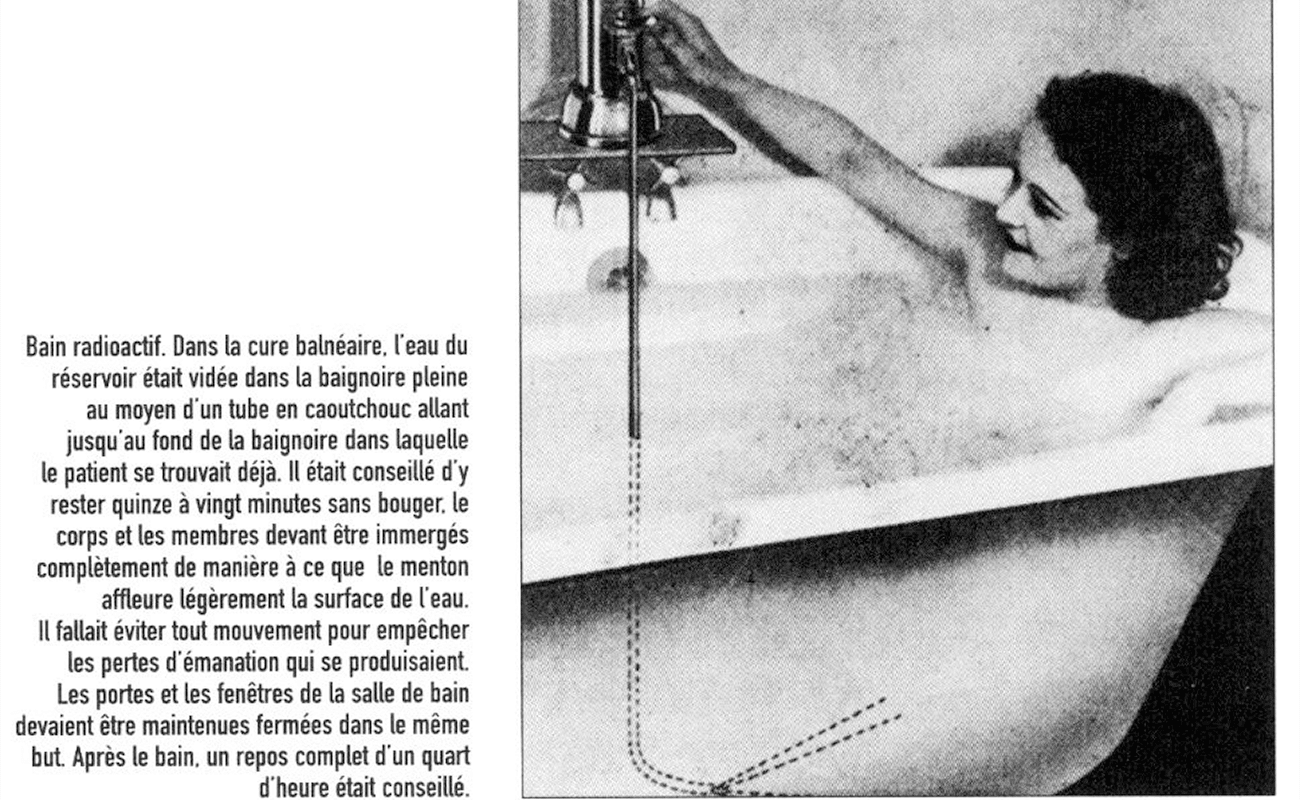
Storage of low-level radioactive material
In the late 1970s, the production of radium and uranium in Olen was discontinued. All radioactive buildings and installations were dismantled and stored according to the best available techniques and in consultation with the authorities.
Radioactive material from the production process was stored on Umicore’s property in Olen. The residues from these historical activities are mainly low-level radioactive materials and cannot be compared in any way with high-level radioactive waste from nuclear power plants.
The governmental agencies FANC/AFCN and OVAM carry out regular and detailed inspections on and around the site. The outcomes consistently confirm that there is no danger for people and the environment. The results are communicated to the local residents and Olen municipality.
Long-term solutions
A study commissioned by the Ministry of Public Health in the early 1990s showed that "at present, there is no danger for public health and the environment" in the immediate surroundings of the Olen site. At the same time, the study stressed that "an overall intervention concept for the full contamination problem in the area around Umicore in St-Jozef-Olen was essential" to ensure a safe transfer to future generations. As a result, a monitoring committee was established in 1993. This committee was tasked with the follow-up of all slightly radioactive zones located outside the plant perimeter and with developing the most appropriate solution for the permanent disposal of materials that could eventually be classified as radioactive waste.
Umicore demolished and remediated the contaminated buildings outside the plant to protect local residents and the local environment. In addition, it put in place a monitoring program with an external radiation expert and periodic reporting to the authorities. This program involves inspections of the storage facilities, measurement of radon radiation, stability monitoring, and monitoring of groundwater quality.
Based on the results of this monitoring, the authorities have consistently confirmed that there is no risk to the health of employees, local residents or the environment.
Since 2009, Umicore and the federal and regional authorities have continued to work together to find a permanent and final solution for the disposal of a part of the historical materials that may, following further assessment, be classified as low-radioactivity, long-lived radium-containing waste.
A clear legal framework
In early 2020, the federal government, through FANC/AFCN and NIRAS/ONDRAF published a vision paper outlining a definitive, long-term destination for the radium-containing waste to address, once and for all, the historical radioactive legacy at the Olen site.
Following this vision paper, entitled "Management of Radium Waste at Umicore in Olen", a working group was created in 2021 to develop the concepts and to dispose of waste sustainably and in the long term. Depending on the specific radioactivity (Becquerel per gram), the memorandum identifies various repository methods, ranging from above- ground to underground disposal solutions.
The project brings together FANC/AFCN, NIRAS/ONDRAF, OVAM and Umicore and is supported by a clearly defined roadmap. This includes the inventory of the materials, the completion of a legal framework, and the design and construction of the necessary permanent facility for the disposal of radioactive radium-bearing waste.
The first phase of the roadmap was completed in early 2022. The second phase, which is currently underway, addresses the legislative and regulatory framework as well as the remediation options. It aims to establish a National Policy for this specific type of radioactive radium-bearing waste.
In parallel and separately, the federal government introduced a legal framework for the management and remediation of soils and sites contaminated by radioactive substances. This framework, implemented by the FANC/AFCN, enables remediation and protective measures for radiologically contaminated soils. It complements the regulatory framework that governs the management and disposal of radioactive waste.
Under the federal and Flemish legal frameworks, soils and materials that are not or slightly contaminated by radioactive substances, but that are not radioactive waste, can be managed through dedicated remediation projects. These projects can include removing contaminated soil, applying protective measures, or the safe and controlled on-site containment of these materials. These measures would be carried out under supervision by the FANC/AFCN and OVAM.
This approach applies to the largest part of the historical materials, which have little or no radiological risk and therefore do not fall under the national policy for radioactive waste. It provides a clear legal basis to deal with historical soil contamination in a safe and transparent way and is fully separate from the federal decision‑making on the final disposal of specific radioactive radium-bearing waste.
Umicore is fully committed to these steps, with the objective of finding a sustainable solution to the radioactive legacy of the Olen site as soon as possible.
Umicore has a good relationship and an open dialogue with its neighbors and with the local authorities. Through consultations, letters, site visits, and a 24/7 phone line, among others, we keep local residents informed and respond to their questions.
Explanation of materials, waste and waste categories
At Umicore’s site in Olen, there are materials that contain radium from activities that took place more than 100 years ago. These materials are currently safely stored and monitored, but they are not automatically considered radioactive waste.
The distinction is important:
Materials are substances that still need to be studied, measured and assessed.
They may:
- be safely reused,
- eventually be treated as conventional (non‑radioactive) waste, or
- eventually be classified as radioactive waste.
Waste is the part of the material that after careful analysis has been declared as such by Umicore and officially classified as radioactive waste or non-radioactive waste. Once classified, it is assigned to a specific waste category, each with a defined long‑term management and disposal solution as determined by the competent authorities.
Once the materials are declared and classified as low-radioactive, long-lived radium-containing waste, they will be transferred to NIRAS/ONDRAF as the responsible authority. NIRAS/ONDRAF will manage the waste according to the appropriate category and disposal method.
Explanation of radioactive residue storage sites

Most of the tailings are stored in special facilities on the site, in line with the best available techniques, or in a former landfill. Another part, of which a fraction of the soil is radioactive, is located within a fenced former landfill off-site.


